|
|








November 26, 2026
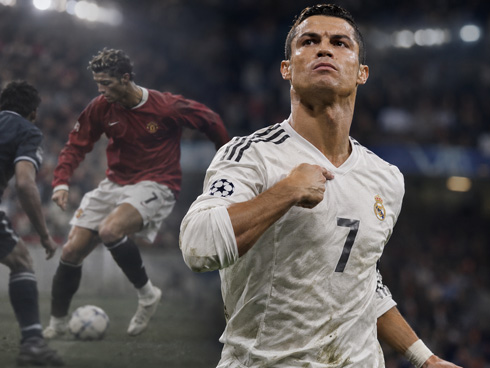
Ronaldo's transformation from a flashy winger into one of football's greatest goalscorers is a remarkable story of adaptability and ambition. From his early days at Manchester United to his record-breaking years at Real Madrid, Ronaldo continuously refined his movement, finishing and physical abilities to remain among the world's most dangerous attacking players...
It's easy to forget now, but Cristiano Ronaldo didn't arrive in English football as a top or renowned goalscorer. He arrived as a skinny teenager with fast feet and a fondness for stepovers, who could thrill a crowd one minute and infuriate his own teammates the next. Two decades later, he became the first player in history to reach 900 official career goals. Getting from tricky winger to relentless finisher took years of deliberate change, much of it unglamorous and most of it happening away from the cameras...
Cristiano Ronaldo had to constantly change his style of play transitioning between roles as a: ✅️ Midfielder. ✅️ Winger. ✅️ Striker. And still became a player with most goals in history. The most complete athlete ever.🐐 https://t.co/BeeUDiHioL
— CristianoXtra (@CristianoXtra_) April 26, 2024
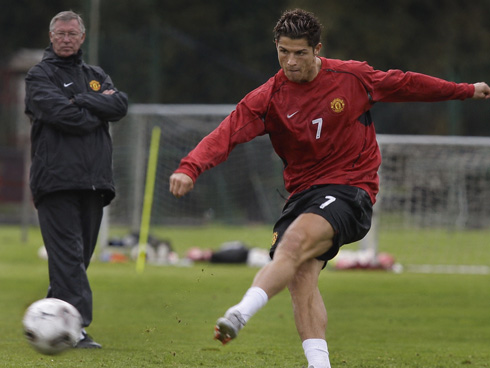
Sir Alex Ferguson signed Ronaldo from Sporting Lisbon in 2003, after the young Portuguese winger had run Manchester United ragged in a friendly. He was just 18, and he was handed the famous number 7 shirt previously worn by David Beckham.
The talent was obvious from the start. He could beat defenders for fun, but his end product was inconsistent. Too often, a dazzling run would finish with a wayward cross or a shot ballooned over the bar. This made him a target to opposing fans who mocked his theatrics, and some pundits wondered whether he would ever become more than a showman. In his early seasons, his goal tally was respectable rather than spectacular.
Ferguson and his coaching staff worked hard to make Ronaldo more efficient. The message was simple. Every trick needed a purpose, and beating a defender only mattered if it led to a chance. Ronaldo spent hours after training working on his finishing and his free kicks, refining the knuckleball technique that would become one of his trademarks.
The results arrived in spectacular fashion during the 2007/08 season. Ronaldo scored 42 goals in all competitions, including a header in the Champions League final against Chelsea in Moscow. United won the trophy, and he collected his first Ballon d'Or later that year. The winger who once frustrated fans had become the most dangerous attacker in Europe.
In 2009, Real Madrid paid a world record fee of around £80 million to bring Ronaldo to Spain. There, he moved to the left side of the attack, which allowed him to cut inside onto his stronger right foot and shoot. His goal tally exploded, and for several seasons he scored more goals than games played.
As he moved into his thirties, his role changed again. Under Zinedine Zidane, he spent far less time running at defenders from wide areas and far more time waiting in and around the penalty area. He dribbled less and conserved his energy for the moments that mattered. It worked brilliantly. Ronaldo left Madrid in 2018 as the club's all time leading scorer, with four Champions League titles to his name from his time in Spain.
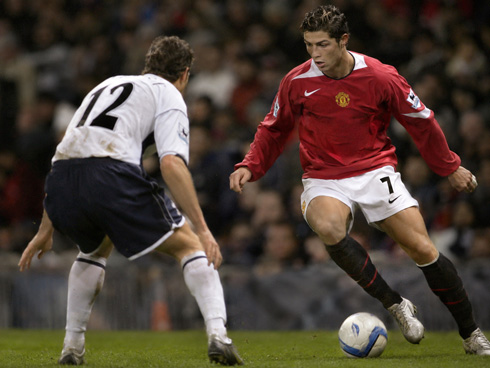
The biggest shift in Ronaldo's game was mental rather than physical. As a young winger, he wanted the ball at his feet as often as possible. As a mature striker, he understood that the most dangerous work often happens before the ball arrives.
He became a master of timing his runs, drifting away from defenders before darting into space at the back post or the edge of the six yard box. Many of his later goals were tap-ins and first time shots that looked easy only because his movement had already done the hard work. Unlike the numbers in the Irish lotto results, there was nothing random about where Ronaldo turned up, as each run was the product of years of study and repetition. Defenders who once feared his stepovers now had to worry about losing sight of him altogether.
The teenager who arrived at Old Trafford was slight and wiry. Over the years, Ronaldo built himself into one of the fittest athletes in world football, adding strength without losing his speed. That physical work opened up a whole new way of scoring.
His heading became a genuine weapon. Ronaldo's leap is extraordinary, and his header for Juventus against Sampdoria in December 2019 went viral because of how high he seemed to hang in the air. For defenders, it created an impossible problem. A winger can be marked out of a game by keeping him wide, but a forward who can score with either foot and dominate in the air is far harder to stop.
Ronaldo's story is often told as one of natural genius, but the more interesting lesson is about adaptability. He was willing to let go of the parts of his game that had made him famous once they stopped being the most effective option. Plenty of talented players never manage that.
For young footballers, the takeaway is that your game doesn't have to stay the same. The skills that get you noticed at 18 might not be the ones that keep you at the top at 35. Ronaldo kept asking what he needed to improve next, and he put in the work to change.
Whatever you think of him as a personality, few players have ever reinvented themselves so successfully. The stepovers made him a star, but the goals made him a legend.
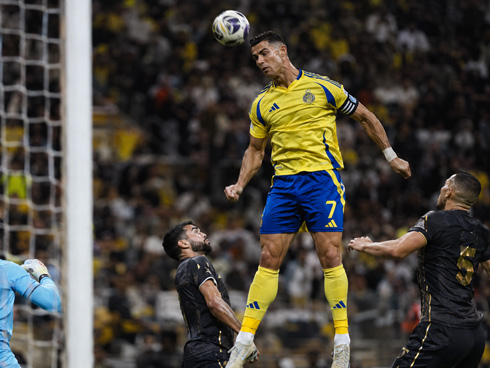
Cristiano Ronaldo next game for Al Nassr is on November 28, against Al Hazm, for the Saudi Pro League. You can watch Al Hazm vs Al Nassr, Real Madrid vs Alaves, Olympiacos vs AC Milan, Crystal Palace v Real Sociedad, Nottingham Forest vs Chelsea and Celta de Vigo vs Bournemouth, all matches provided from our football streaming game pages.
Al Nassr next game:
Al Hazm vs Al Nassr kick-off time (28-11-2026):
Beijing (China) | UTC/GMT+8: 03:00
India (New Delhi) | UTC/GMT+5.30: 00:30
Saudi Arabia (Riyadh) | UTC/GMT+4: 23:00
Spain (Madrid) | UTC/GMT+2: 21:00
Portugal and England (Lisbon/London) | UTC/GMT+1: 20:00
Rio de Janeiro (Brazil) | UTC/GMT-3: 16:00
New York (United States) | UTC/GMT-4: 15:00
Los Angeles (United States) | UTC/GMT-7: 12:00
Sources: ronaldo7.net / theguardian.com / espn.com