|
|










November 11, 2026
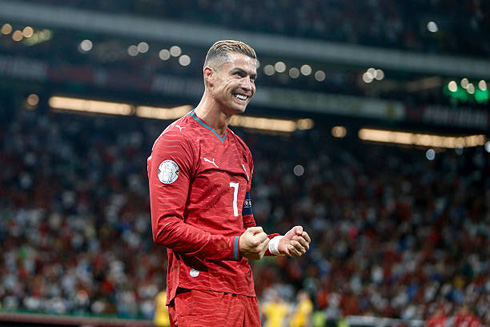
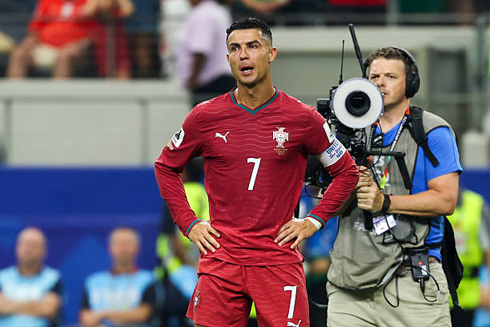
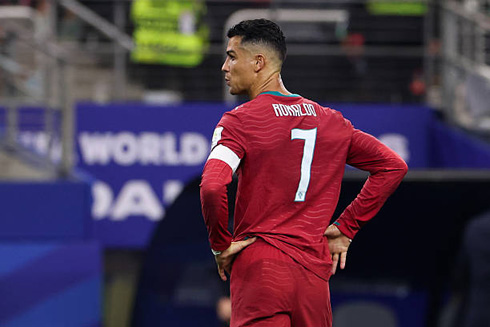
Who will wear Cristiano Ronaldo's iconic No. 7 shirt for Portugal now that his international career has ended? Rafael Leão has already stepped into the number, but with several attacking talents emerging, the race to inherit one of football's most recognisable shirts remains an intriguing question.
Cristiano Ronaldo spent 23 years making Portugal's number seven almost inseparable from his name. When he announced his international retirement on November 5, 2026, he did more than end an extraordinary chapter for the national team. He opened up a debate about who should wear the shirt next, and whether anyone should be expected to carry the same weight. For fans trying to predict the outcome, the uncertainty feels a little like weighing the odds on Casino Groups: there are several plausible contenders, but no guaranteed winner. Portugal are not short of attacking talent. The harder part is deciding what being the next No. 7 should actually mean.
🚨 Rafael Leão on wearing his new number for Portugal — the No.7 shirt. 🇵🇹 🗣️ “I tried to honour the shirt and enjoy myself. Cristiano is a childhood idol of mine. My children were also born on the 7th, so I’m really happy. The situation between Ronaldo and the national team? It doesn’t concern us. Once again, we showed that we are a group. He is certainly at home and happy with the victory.”
— Football Tweet ⚽ (@Footballtweet) October 2, 2026
The shirt belonged to other gifted Portuguese footballers before Ronaldo, including Luís Figo and Simão Sabrosa. But Ronaldo turned the number into an identity known far beyond international football. His international career ended with 234 appearances and 146 goals, both men's world records, alongside the Euro 2016 trophy and two Nations League titles.
He also scored at six World Cups, a reminder of just how long he remained central to Portugal's ambitions. In his farewell message, Ronaldo spoke of handing the shirt back to the national team. That was a fitting distinction: numbers belong to teams, even when individual players give them extraordinary meaning.
For supporters wondering who might be first in line, there is already a compelling answer. Rafael Leão wore number seven during Portugal's 4-2 victory over Denmark on October 1, when Ronaldo was absent from the matchday squad.
The switch was not a formal coronation. Under Nations League match-numbering requirements, Portugal needed to assign numbers to the eligible players. Leão had previously worn 17, and there has been no confirmed announcement making him Ronaldo's permanent successor.
Yet the choice makes footballing sense. Leão offers explosive acceleration, an appetite for one-on-one duels and the confidence to change matches from the left flank. He plays differently from the late-career Ronaldo, but the number has always been associated with ambition as much as position.
Leão is not the only credible candidate. Pedro Neto has the pace, directness and relentless movement that have become valuable weapons in Portugal's attack. Francisco Trincão brings a different skill set, relying more on close control, combination play and clever movement between defenders.
João Félix is another intriguing option. His creativity and instinct for finding space give him a claim to a prominent attacking role, even if he is not a conventional touchline winger. Further down the age ladder, Geovany Quenda represents the possibility of giving the shirt to a rising talent rather than an established international.
None of these players needs to imitate Ronaldo. The right choice will depend on who consistently earns a place in the side, rather than who generates the loudest comparison.
There is an important difference between inheriting a shirt and inheriting a job. Gonçalo Ramos, who scored in the October win over Denmark, is an obvious candidate to lead the line. But wearing number nine rather than seven would not make his contribution any less significant.
Likewise, Portugal's leadership does not have to settle on one forward. Bruno Fernandes, Rúben Dias and Bernardo Silva provide experience, while younger players can shape the team's attacking identity. Coach Jorge Jesus has already named his first squad since Ronaldo's retirement, with matches against Denmark and Wales scheduled for November 14 and 17.
Those games offer a first glimpse of how Portugal will distribute responsibility without the player who defined an era.
The temptation will be to treat every touch, goal and missed chance by Portugal's next number seven as a referendum on Ronaldo's legacy. That would be unfair to the new wearer, and it would misunderstand what made the old one exceptional.
Ronaldo did not become CR7 because someone handed him a famous shirt. He gave the shirt its modern reputation through years of performances, trophies and impossible-looking records.
Leão may be the natural frontrunner, or Portugal might eventually choose another talent. Either way, the most convincing successor will be the player who makes the number feel like his own. Portugal's next No. 7 should be allowed to write a different story.
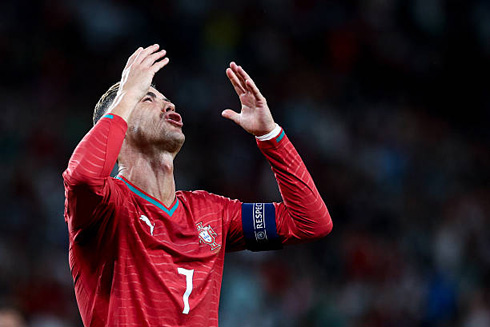
Cristiano Ronaldo next game for Portugal is on November 14, against Denmark, for the UEFA Nations League. You can watch Portugal vs Denmark, Italy vs France, Czech Republic vs Spain, England v Croatia, Turkey vs Belgium and Serbia vs Germany, all matches provided from our stream football game pages.
Portugal next game:
Portugal vs Denmark kick-off time (14-11-2026):
Beijing (China) | UTC/GMT+8: 03:00
India (New Delhi) | UTC/GMT+5.30: 00:30
Saudi Arabia (Riyadh) | UTC/GMT+4: 23:00
Spain (Madrid) | UTC/GMT+2: 21:00
Portugal and England (Lisbon/London) | UTC/GMT+1: 20:00
Rio de Janeiro (Brazil) | UTC/GMT-3: 16:00
New York (United States) | UTC/GMT-4: 15:00
Los Angeles (United States) | UTC/GMT-7: 12:00
Sources: ronaldo7.net / bbc.com / goal.com