|
|







November 6, 2026
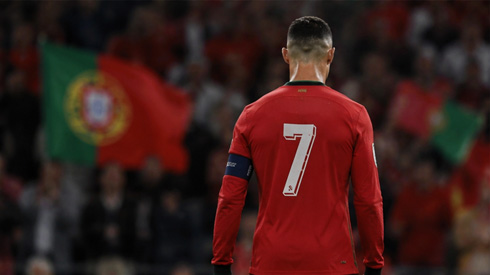
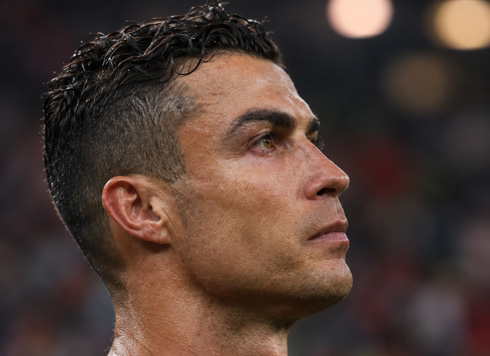
Ronaldo has officially retired from the Portuguese national team, ending an extraordinary 23-year international career. At 41, the legendary forward has chosen not to gamble his future on another international comeback, leaving behind 146 goals, 234 appearances and a legacy that forever changed Portuguese football...
Every great football career eventually reaches a crossroads, and even Cristiano Ronaldo cannot escape the passage of time. After more than two decades representing Portugal, the five-time Ballon d'Or winner has decided that his international journey has reached its natural conclusion. Unlike games of chance, such as the credit card slots from PremiumTimesNG' list, Ronaldo's decision was never about leaving his future to luck. His announcement, made on November 5, 2026, brings down the curtain on one of football's most remarkable international careers. Yet it does not mean he is finished with the sport. Instead, it marks the beginning of a different chapter, one in which he can focus on his remaining ambitions without the demands of international football.
Portugal estará sempre em mim https://t.co/dnFj51rxmh
— Cristiano Ronaldo (@Cristiano) November 5, 2026
When an 18-year-old Ronaldo made his Portugal debut against Kazakhstan in August 2003, few could have imagined the records he would eventually establish.
Over the following 23 years, he became the most-capped male international footballer in history, scoring an unprecedented 146 goals across 234 appearances.
His achievements extended far beyond individual statistics. Ronaldo captained Portugal to their historic European Championship triumph in 2016, before helping the country secure UEFA Nations League titles in 2019 and 2025.
For an entire generation of Portuguese supporters, Ronaldo became more than a footballer. He represented ambition, resilience and the belief that a relatively small nation could compete against football's greatest powers.
His departure leaves behind an extraordinary standard for future generations.
Despite winning almost everything football had to offer, one major ambition remained unfulfilled: lifting the FIFA World Cup.
Ronaldo participated in six editions of the tournament, from Germany 2006 to North America 2026, becoming the first player to score in six different World Cups.
His final appearance came during Portugal's disappointing 1-0 defeat against Spain in the round of 16 of the 2026 tournament.
Following that elimination, Ronaldo acknowledged that he had played his final World Cup match but initially avoided making an immediate decision about his international future.
Four months later, that uncertainty disappeared.
Although the ultimate prize escaped him, his international achievements remain exceptional. Winning three major trophies with Portugal is a remarkable accomplishment for a player who began his career when the country had never won a major senior international title.
The final months of Ronaldo's international career were not without controversy.
Tensions emerged between the veteran forward and Portugal manager Jorge Jesus, culminating in Ronaldo leaving the national team's training camp in September.
The incident resulted in disciplinary action and intensified speculation about his future involvement with the national side.
However, reducing Ronaldo's retirement entirely to that disagreement would overlook the broader circumstances surrounding his decision.
At 41, managing physical demands, recovery periods and playing opportunities inevitably becomes increasingly important.
In his emotional farewell message, Ronaldo acknowledged how difficult the decision had been, emphasizing that some choices involve both reason and emotion.
His words suggested a player looking back with gratitude rather than one wishing to prolong an increasingly complicated situation.
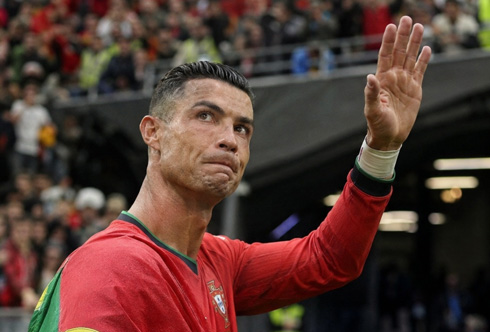
Throughout his career, Ronaldo has consistently challenged expectations about how long an elite footballer can remain competitive.
His longevity has been built on exceptional discipline, demanding training routines and an unwavering commitment to physical preparation.
Nevertheless, continuing to represent Portugal would have meant additional international travel, demanding fixtures and potentially greater exposure to injuries.
From that perspective, retiring from international football appears a sensible way to manage the final stage of his playing career.
Rather than gamble his future by extending an already extraordinary international journey, Ronaldo can concentrate on maintaining his competitive standards at club level.
That does not necessarily mean avoiding every risk. His career has always involved ambitious decisions, calculated challenges and a remarkable willingness to push beyond conventional limits.
This time, however, knowing when to walk away may prove just as important as knowing when to keep fighting.
Ronaldo's retirement does not mark the end of his professional football career. He remains committed to Saudi Arabian club Al Nassr, where his contract runs until 2027, and the prospect of reaching 1,000 official career goals provides another compelling motivation.
For Portugal, meanwhile, the challenge is considerably different.
The national team must now adapt to life without the player who defined its identity for more than two decades. Younger talents will have opportunities to assume greater responsibility, while Jorge Jesus faces the difficult task of building a new generation of leaders.
Ronaldo's influence, however, will remain deeply embedded in Portuguese football. His records may eventually be challenged, but his contribution to the country's sporting history is unlikely to be forgotten.
In choosing to retire from international football, Ronaldo has not abandoned his competitive spirit. He has simply accepted that even the greatest journeys must eventually reach their destination.
And after 23 unforgettable years, few players have earned the right to decide their own farewell quite like Cristiano Ronaldo.
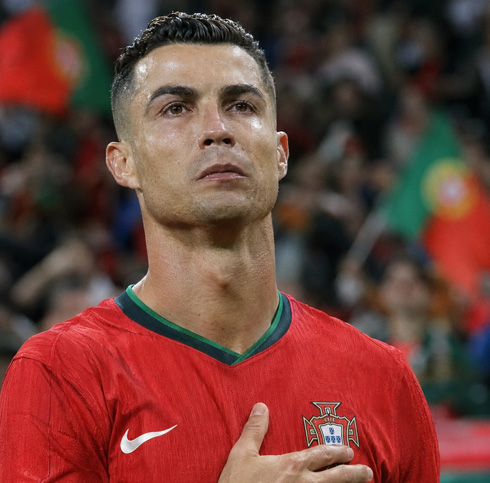
Cristiano Ronaldo next game for Portugal is on November 14, against Denmark, for the UEFA Nations League. You can watch Portugal vs Denmark, Valencia vs Real Madrid, Atletico Madrid vs Barcelona, Nott. Forest v Manchester City, Arsenal vs Hull City and Leeds vs Tottenham, all matches provided from our soccer streaming game pages.
Portugal next game:
Portugal vs Denmark kick-off time (14-11-2026):
Beijing (China) | UTC/GMT+8: 03:00
India (New Delhi) | UTC/GMT+5.30: 00:30
Saudi Arabia (Riyadh) | UTC/GMT+4: 23:00
Spain (Madrid) | UTC/GMT+2: 21:00
Portugal and England (Lisbon/London) | UTC/GMT+1: 20:00
Rio de Janeiro (Brazil) | UTC/GMT-3: 16:00
New York (United States) | UTC/GMT-4: 15:00
Los Angeles (United States) | UTC/GMT-7: 12:00
Sources: ronaldo7.net / fifa.com / reuters.com