|
|









September 7, 2026
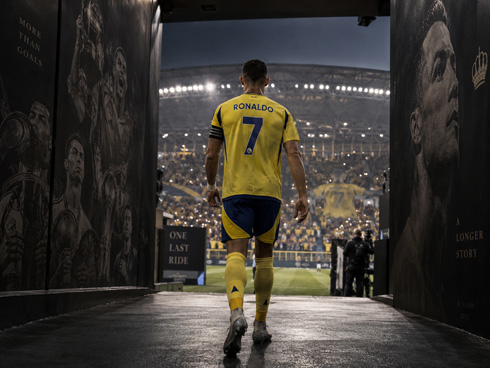
Cristiano Ronaldo’s final season could end with one of football’s biggest milestones: 1,000 career goals. But as the 41-year-old prepares for what may be his last campaign with Al-Nassr and Portugal, his legacy will depend on far more than the final number...
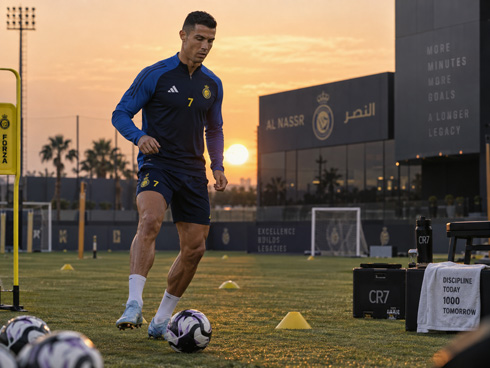
Cristiano Ronaldo has admitted that the 2026/27 campaign will probably be his last as a professional footballer. At 41, the Al-Nassr captain is preparing for an ending that has been discussed for years but never previously felt this close. The number attracting most attention is 1,000. Ronaldo reached 976 official career goals during Portugal’s World Cup campaign and has continued scoring since returning to club football. A final season gives him a limited but realistic opportunity to reach a total no male player has recorded at the highest professional level. Broadcasters can update the countdown after every goal, while a betting operator that also has an online casino can build interest around his next appearance. The milestone is easy to promote. Ronaldo’s final year will be harder to judge because the quality of the ending depends on more than one number.
It’s been two years since Cristiano Ronaldo scored his 900th career goal.
— B/R Football (@brfootball) September 5, 2026
Now he’s just 22 away from hitting 1000 🗣️🇵🇹 pic.twitter.com/8aupjWIqY2
Ronaldo’s Al-Nassr contract runs until June 2027, which fits the timeline suggested in his recent interview with Vogue. He described the current campaign as probably his final year and said he wanted to leave a significant legacy.
He did not announce an exact retirement date. The word “probably” allows him to reconsider, particularly if he remains fit and finishes the season close to 1,000 goals.
That uncertainty will follow every match. If Ronaldo ends the campaign on 995, the temptation to continue for another few months would be obvious. Retiring after reaching 1,000 would produce a cleaner ending.
Football rarely gives players that level of control. Injury, selection and team performance can interrupt even a carefully planned final season.
Ronaldo can influence his physical preparation and finishing. He cannot guarantee enough matches or chances to complete the total.
Ronaldo has confirmed that the 2026 World Cup was his last. Portugal reached the round of 16 before losing 1-0 to Spain.
His penalty against Croatia in the previous round gave him his first goal in a World Cup knockout match. It was one of the few scoring achievements missing from his international record.
Ronaldo also became the first player to score at six different World Cups. His tournament goals span 20 years, beginning in 2006 and ending in 2026.
That longevity explains why a simple comparison with younger forwards is rarely useful. Ronaldo’s value to Portugal during his final years was based partly on remaining available across several generations of the national team.
He played alongside Luís Figo during his first World Cup. By 2026, Portugal’s squad included players who had not been born when he made his senior international debut.
The final tournament did not produce the ending he wanted, but it added another knockout goal and closed his World Cup career with 11 goals across 27 appearances.
Leaving the World Cup does not automatically mean retiring from international football. Portugal begin their Nations League campaign against Wales on 24 September, followed by a match in Norway three days later.
Ronaldo has not yet treated his international career as a closed chapter. He holds the men’s records for both caps and goals, with 233 appearances and 146 goals after the World Cup.
The Nations League carries particular importance because Ronaldo has already won the competition twice with Portugal. It offers competitive fixtures without asking him to prepare for another four-year World Cup cycle.
Roberto Martínez must still decide how much of the attack should be built around a 41-year-old striker. Gonçalo Ramos gives Portugal a more mobile option through the middle, while Rafael Leão, João Félix and other forwards can change the shape of the side.
Ronaldo remains dangerous inside the penalty area, particularly when Portugal can create crosses and cutbacks. The tactical problem appears when opponents force him to receive the ball further from goal.
A reduced role could extend his international career, but it would require an adjustment from a player accustomed to starting the largest matches.
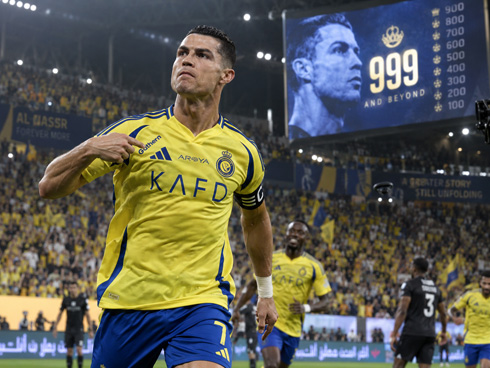
A personal scoring target cannot become more important than Al-Nassr’s season. Ronaldo’s strongest route towards 1,000 is helping the club remain involved in matches that matter.
Al-Nassr started the league campaign well before losing 2-1 to Al-Ittihad. The defeat ended their perfect opening and left them behind Al-Hilal.
Ronaldo played the entire match but could not prevent the first league setback under Ange Postecoglou. Al-Nassr struggled to create enough clear opportunities despite having João Félix, Sadio Mané and Kingsley Coman available in attack.
That supporting cast should create chances for Ronaldo, though fitting so many senior forwards into one system requires balance. If every attacking player moves towards the ball, the penalty area becomes easier to defend.
Ronaldo now does his best work close to goal. Postecoglou needs runners around him and enough width to stop central defenders concentrating entirely on his movement.
The arrangement must also protect Al-Nassr when possession is lost. Asking Ronaldo to lead an aggressive press for an entire match is unlikely to be the best use of his energy.
Ronaldo’s fitness has allowed him to play far beyond the usual retirement age for an elite forward. That durability does not remove the need to manage his workload.
Al-Nassr will compete across domestic and continental competitions. Portugal’s Nations League schedule adds more matches and international travel.
Playing every minute may increase his immediate chances of scoring, but it also raises the risk of fatigue during the later part of the season.
The club can be selective without treating him as a substitute. Starting Ronaldo in important league matches and allowing another forward to handle selected cup fixtures could keep him fresher.
Postecoglou can also replace him once a game is settled. Remaining on the pitch to chase another goal during a comfortable win may help the countdown but offer little value to the team.
Ronaldo has built much of his career around recovery and preparation. His final season may require him to accept that missing one match can improve his chances of influencing the next four.
A visible goal target changes how every missed chance is discussed. A saved shot or misplaced pass can be treated as an opportunity lost in the pursuit of 1,000.
Penalties will receive particular attention. Ronaldo has been the regular taker for club and country, so he should continue assuming that responsibility while he remains on the pitch.
Open-play decisions are more complicated. A teammate in a better position must not feel obliged to pass because Ronaldo is approaching a milestone.
The same applies to free kicks. Reputation alone should not decide who takes every attempt if another specialist offers a better option from a particular angle.
Ronaldo’s drive has helped him accumulate his extraordinary total. During a final campaign, that ambition must remain connected to the needs of Al-Nassr and Portugal.
Goals scored in victories will carry more weight than those added during matches that have already been lost.
Ronaldo is Real Madrid’s record scorer and the leading goalscorer in Champions League history. He also holds the men’s international goals record.
Reaching 1,000 would add a simple headline to a career filled with more complicated achievements. It would not explain how he changed his game to remain productive.
The young Ronaldo attacked full-backs from the wing, used stepovers and carried the ball over longer distances. At Real Madrid, he developed into a forward who attacked the far post and found space inside the box.
His later years have required another adjustment. He now limits unnecessary movement, waits for the correct delivery and relies on timing rather than repeated dribbles.
That development is more relevant to his longevity than the final career number. Ronaldo has remained useful because he stopped trying to play exactly as he did at 25.
The desire for a perfect farewell can distort how a final season is viewed. Ronaldo may reach 1,000 goals, win a trophy and retire immediately afterwards. He may also finish short of the target or end the year outside Al-Nassr’s strongest side.
None of those outcomes would rewrite his previous achievements.
The final months should show how much he can still contribute at 41. If he helps Al-Nassr challenge for the Saudi Pro League and remains useful to Portugal, the season will have sporting value beyond a countdown.
Ronaldo has spent much of his career turning ambitious targets into achievable ones. One thousand goals would be his largest numerical landmark, but it should not become the only acceptable ending.
His legacy is already secure. The last season is an opportunity to complete it on his own terms, even if the final number stops somewhere other than 1,000.
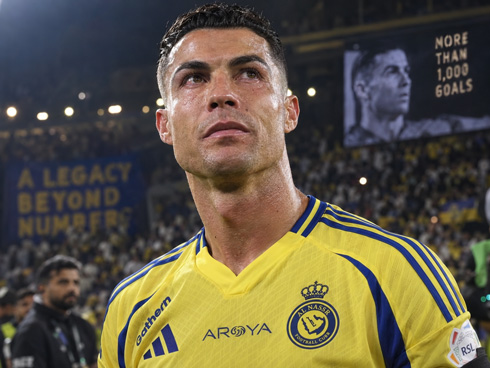
Cristiano Ronaldo next game for Al Nassr is on September 9, against Al Ittihad, for the Saudi Pro League. You can watch Al Nassr vs Abha, Real Madrid vs Inter, Barcelona vs Feyenoord, FC Porto vs Manchester City, Napoli vs Arsenal and Club Brugge vs Aston Villa, all matches provided from our live football game pages.
Al Nassr next game:
Al Nassr vs Abha kick-off time (08-09-2026):
Beijing (China) | UTC/GMT+8: 03:00
India (New Delhi) | UTC/GMT+5.30: 00:30
Saudi Arabia (Riyadh) | UTC/GMT+4: 23:00
Spain (Madrid) | UTC/GMT+2: 21:00
Portugal and England (Lisbon/London) | UTC/GMT+1: 20:00
Rio de Janeiro (Brazil) | UTC/GMT-3: 16:00
New York (United States) | UTC/GMT-4: 15:00
Los Angeles (United States) | UTC/GMT-7: 12:00
Sources: ronaldo7.net / espn.co.uk / goal.com