|
|






July 6, 2026
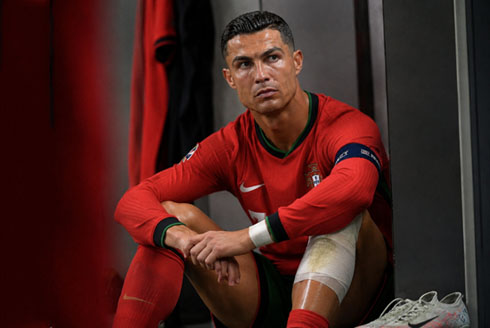
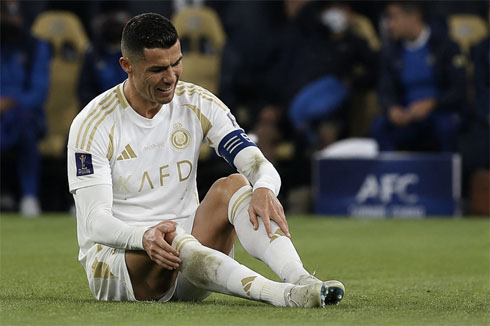
Injuries can reshape an entire season, turning favourites into outsiders and forcing coaches to rebuild tactics overnight. From basketball franchises to national football teams, the loss of one key leader like Cristiano Ronaldo can damage results, morale, rotation depth, and long-term title ambitions...
Elite sport operates like a well-oiled clockwork mechanism. Every component has its precise role. Coaches calculate physical loads down to the milligram, while executives craft long-term strategies years into the future. This perfect mathematical system can be shattered in an instant by a single ligament tear or an unfortunate fall on a hard court. Key-player injuries mercilessly wreck the fortunes of entire clubs, sending the biggest favourites into the ranks of hopeless underdogs within seconds.
When experts conduct serious pre-match analysis, they scrutinise medical reports with great care. In professional sport, a leader’s injury is measured in lost titles, shattered careers, and multimillion-dollar franchise losses. A team’s injury list is the primary factor determining the distribution of places in the league table at the end of the long marathon.
World Cup 2026 - Cristiano Ronaldo
🗣️ "It's about passion", Cristiano Ronaldo. 🇵🇹#FIFAWorldCup pic.twitter.com/qSvCxBLMEN
— FIFA World Cup (@FIFAWorldCup) July 5, 2026
When a team’s cornerstone is sidelined, the squad plunges into a deep crisis of ideas. Coaches cannot quickly replace a world-class performer with an ordinary reserve. The entire game model must be forcibly rebuilt, breaking the automatic connections that were honed in training.
Stages of an internal crisis following the loss of a leader:
1. Breakdown of the game plan. The attacking line’s automatisms vanish, and players waste precious seconds on tactical decision-making.
2. Increased load on rotation players. Regular substitutes must spend far more time on the pitch, leading to a rapid decline in their personal efficiency.
3. Accumulation of physical fatigue. A limited squad wears down the remaining athletes, triggering a chain reaction of new injuries.
4. Psychological collapse of the collective. The team loses mental self-belief and begins to fear stronger opponents.
Customary areas of responsibility shift out of place across every zone of the pitch. Defenders make fatal errors more frequently because the midfield no longer provides sufficient support when playing out from under aggressive pressing. Strikers are starved of incisive passes. They are forced to drop deep in search of the ball, rendering the forward line completely toothless.
To accurately gauge the impact of the treatment room on team success, a thorough mathematical analysis is required. Below are the statistical indicators of leading franchises’ losses across various sports in recent months.
| Club / National Team | Injured Leader | Nature of Injury | Drop in Attacking Efficiency | Change in League / Tournament Position |
|---|---|---|---|---|
| Indiana Pacers | Tyrese Haliburton | Achilles tendon rupture | Minus 18.4 percentage points | Dropped out of the play-off zone |
| Japan national team | Wataru Endo | Recurring foot injury | Loss of midfield control | Reduced chances of advancing from the group |
| Philadelphia 76ers | Joel Embiid | Hip and ankle problems | 22% decrease in rebounds | Series loss to the Knicks |
| Utah Jazz | Walker Kessler | Shoulder surgery | Rise in points conceded in the paint | Dropped to the bottom of the conference |
The loss of a single elite player reduces a team’s overall efficiency by roughly a fifth of its original potential. Restoring that balance through internal reserves mid-season is virtually impossible.
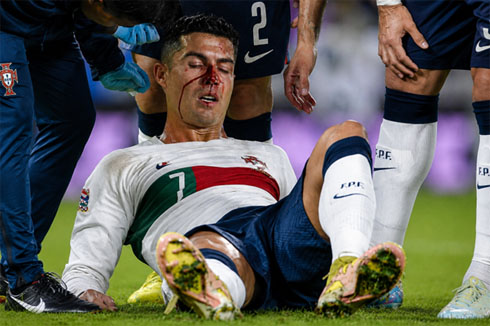
The current campaign has vividly demonstrated just how ruthless a packed sporting calendar can be towards the planet’s biggest stars. A striking example of completely shattered hopes was the drama at basketball club Indiana Pacers. Their starting point guard Tyrese Haliburton tore his Achilles tendon in Game 7 of last year’s finals and sat out the entire 2025/2026 regular season. Without their leading conductor, the Pacers instantly lost their attacking potency. The team committed a huge number of careless turnovers, dropping predictably to the bottom of the Eastern Conference table.
The current 2026 NBA play-offs in May and June resemble a brutal survival battle. Minnesota Timberwolves lost Donte DiVincenzo to an Achilles tendon rupture in Game 4 of the series against the Nuggets. The Wolves’ leader Anthony Edwards fought bravely through a severe knee contusion, missing important games. Philadelphia’s centre Joel Embiid sat out the opening play-off games following an emergency appendectomy and later suffered chronic hip and ankle pain. This led to talented teams being eliminated in the tournament’s early stages.
The football world has also experienced serious squad problems in recent days. On 11 June 2026, the Japanese national team received a painful blow just before the start of the expanded World Cup in North America. Experienced captain Wataru Endo aggravated an old injury to his left foot during the final training session before the match against Iceland. Head coach Hajime Moriyasu made the tough decision to exclude the Liverpool midfielder from the official tournament squad.
The physical dimensions of injuries represent only half of the overall problem. The psychological climate of the affected squad plays an equally large role. When a leader is sidelined for an extended period, the dressing room often struggles with despondency. Other players subconsciously begin looking for excuses for future failures. They blame tactical errors on the thin roster, lowering the demands on their own fitness.
Psychological barriers that teams face during a squad crisis:
• The emergence of the saviour syndrome. A substitute player tries to take on too many responsibilities, which ends in chaotic play and a rise in errors.
• Loss of trust in the coaching staff. Players begin to doubt the correctness of new tactical blueprints offered in place of established schemes.
• Giving up the fight at critical moments. Even when trailing by the smallest margin, the collective throws in the towel and cannot find the strength to turn the game around.
• Internal conflicts. The search for scapegoats begins among the fit players who cannot cope with the increased personal responsibility.
Medical staff also come under enormous pressure from the franchise’s top management. Owners demand that star players’ rehabilitation be accelerated as much as possible to protect business revenues. This often leads to athletes returning to the pitch too early, before the recovery period is fully complete. Doctors’ wrong calls end in severe relapses that can ruin a sportsperson’s career.
One should not blindly trust clubs’ official press releases, which often deliberately conceal the true extent of problems in order to mislead rivals. It is essential to closely monitor players’ recovery dynamics, study the specifics of particular surgical interventions, and take into account the body’s general biorhythms when returning to training.
Quality analytics is built on checking squad depth. Strong organisations account for the risk of potential injuries as early as the transfer-budget planning phase. They acquire capable understudies who can step in for leaders when unexpected circumstances arise.
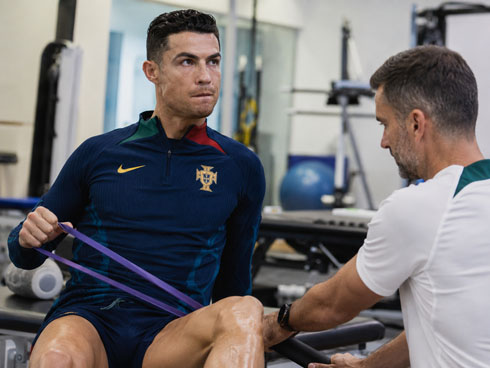
Cristiano Ronaldo next game for Portugal is on July 6, against Spain, for the FIFA World Cup. You can watch Portugal vs Spain, USA vs Belgium, Brazil vs Norway, Mexico vs England, Argentina vs Egypt and Switzerland vs Colombia, all matches provided from our live football game pages.
Portugal next game:
Portugal vs Spain kick-off time (06-07-2026):
Beijing (China) | UTC/GMT+8: 03:00
India (New Delhi) | UTC/GMT+5.30: 00:30
Saudi Arabia (Riyadh) | UTC/GMT+4: 23:00
Spain (Madrid) | UTC/GMT+2: 21:00
Portugal and England (Lisbon/London) | UTC/GMT+1: 20:00
Rio de Janeiro (Brazil) | UTC/GMT-3: 16:00
New York (United States) | UTC/GMT-4: 15:00
Los Angeles (United States) | UTC/GMT-7: 12:00
Sources: ronaldo7.net / menshealth.com / sports.yahoo.com