|
|











June 25, 2026
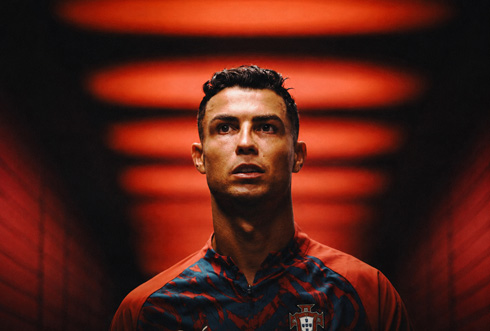
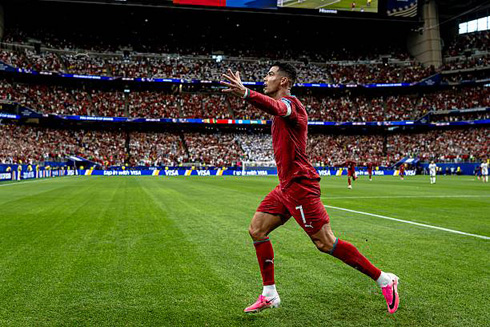
Portugal have a Ronaldo question again at the 2026 World Cup, but this time it feels different. After his two-goal response against Uzbekistan, Cristiano Ronaldo has turned the debate into a luxury problem for Roberto Martínez, not a crisis.
For years, Portugal’s Ronaldo debate has usually sounded uncomfortable. Should he still start? Does the team move better without him? Is this the moment to protect the legend rather than build around him? At the 2026 World Cup, those questions have returned, but with a twist. Ronaldo is 41, yet still scoring, and every big decision around him now affects how fans, pundits and even sportsbook markets such as 1red bet read Portugal’s chances. This is not the old problem of carrying a fading icon. Roberto Martínez is dealing with something far more delicate: how to get the best out of Ronaldo without making one of the most talented squads in the tournament bend too much around him.
Cristiano Ronaldo - I'm back!
🗣️Cristiano Ronaldo: "Todos dicen que debería RETIRARME, pero ESTOY AQUÍ marcando GOLES."
— (fan) REAL MADRID FANS 🤍 (@AdriRM33) June 23, 2026
QUE SIGAN HABLANDO 🤭🤭🤭pic.twitter.com/RSEhMccrTf
There are worse things for a coach than having Cristiano Ronaldo, Gonçalo Ramos, Rafael Leão, João Félix, Pedro Neto and Francisco Conceição all fighting for attacking minutes.
That is the real story here. Portugal are not short of ideas. They are not waiting for one man to drag them through matches the way they sometimes did in the past. Bruno Fernandes can decide games from midfield. Bernardo Silva can slow the rhythm down or speed it up without looking rushed. Vitinha and João Neves give Portugal control, legs and calmness in central areas. Nuno Mendes adds another layer of aggression from deep.
So when Ronaldo plays, the question is not simply whether he deserves to start. It is what Portugal want from that position in a specific game.
Against a deep defence, Ronaldo still offers the clearest penalty-box threat in the squad. He attacks crosses, pins centre-backs, and gives Portugal a target when the match becomes crowded. Against stronger opponents, especially teams that force Portugal to defend space and run backwards, Martínez may want more pressing, speed and mobility around him.
That is the balance. Not sentiment against progress. Not legend against future. Just football.
It would be lazy to judge this version of Ronaldo against the player he was in 2018, or even 2021. He is not that player anymore. Nobody is at 41. He does not cover the same ground, does not explode past defenders as often, and does not spend matches drifting across every attacking lane like he once did.
But Portugal are not the same team either.
That matters. This squad does not need Ronaldo to be everywhere. In fact, it may be better when he is not. The younger players can do the running. The midfield can create the rhythm. The wide players can stretch the pitch. Ronaldo’s job can be more focused: make the box dangerous, punish loose defending, and give Portugal a player opponents still cannot ignore.
That last part should not be underestimated. Even now, defenders react differently to him. They check his movement earlier. They drop half a step deeper. They get nervous when the ball goes wide. That kind of gravity opens space for others, even on days when Ronaldo is not constantly involved.
It is easy to mock the idea of presence because it sounds vague. But in tournament football, presence can be real. Ask any defender whether they would rather mark an ordinary striker or Ronaldo with one last World Cup dream still alive. The answer is obvious.
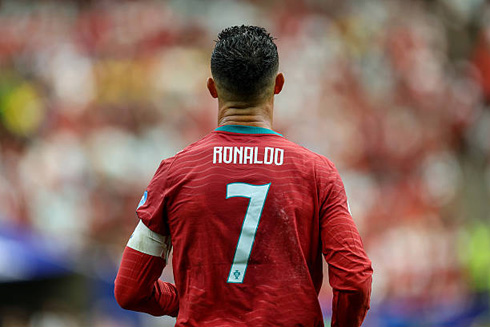
Ronaldo scoring twice against Uzbekistan should not mean every attacking move now has to end at his feet. That is when Portugal can become predictable. Cross after cross, forced pass after forced pass, everyone playing the occasion instead of the game.
The best version of this team uses Ronaldo without shrinking around him.
If Leão is one against one, give him the ball. If Bruno sees the early pass, let him take the risk. If João Félix is better between the lines, do not ask him to become a support act. If Ramos is the right striker for a certain match state, Martínez has to be brave enough to use him.
That is where this becomes a proper coaching test. Ronaldo’s name will always dominate the headline. But Portugal’s World Cup will be decided by whether Martínez can keep the team honest. The shirt cannot be picked by nostalgia. It also cannot ignore what Ronaldo still does better than almost anyone else in the squad.
Portugal’s final group game against Colombia should tell us more than the Uzbekistan win did.
Uzbekistan gave Portugal room to breathe after a tense opening draw. Colombia should be a different kind of opponent: stronger physically, more dangerous in transition, and far less likely to let Portugal play the match entirely at their own speed.
That is where Martínez’s Ronaldo decision becomes fascinating. Start him, and Portugal have their reference point from the first minute. Hold him back, and they may gain more legs early before unleashing him later against tired defenders. Start him with runners close by, and maybe Portugal get the best of both worlds.
There is no perfect answer, which is exactly the point.
Portugal have a 41-year-old captain who still scores World Cup goals, a younger generation good enough to demand responsibility, and a manager who must keep both forces moving in the same direction. That is not a crisis. That is a luxury with consequences.
For years, the Ronaldo debate has sounded like something Portugal needed to solve before they could fully move forward. In 2026, it may be something else entirely.
It may be the problem that keeps them unpredictable.
Opponents still have to prepare for Ronaldo as if one loose ball could change the match. At the same time, Portugal have enough talent around him to punish teams that focus too heavily on him. That is the uncomfortable part for anyone facing Martínez’s side. Ignore Ronaldo, and he can still hurt you. Overload against him, and the spaces open elsewhere.
That is why Portugal’s Ronaldo question feels different now. It is no longer just about age, legacy or emotion. It is about timing, match rhythm and how to squeeze one final tournament burst from a player who refuses to fade quietly.
And if Martínez gets that balance right, Portugal’s biggest debate may end up becoming one of their biggest weapons.
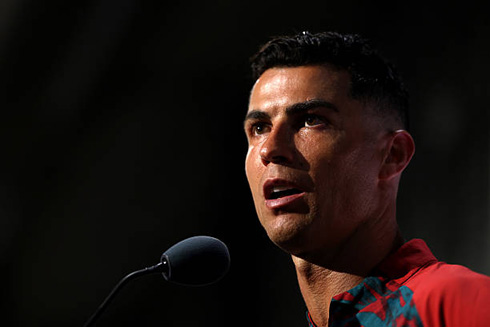
Cristiano Ronaldo next game for Portugal is on June 27, against Colombia, for the FIFA World Cup. You can watch Portugal vs Colombia, Curacao vs Ivory Coast, Czech Republic vs Mexico, Japan vs Sweden, South Africa vs Korea Republic and Ecuador vs Germany, all matches provided from our live sports game pages.
Portugal next game:
Portugal vs Colombia kick-off time (27-06-2026):
Beijing (China) | UTC/GMT+8: 07:30
India (New Delhi) | UTC/GMT+5.30: 05:00
Saudi Arabia (Riyadh) | UTC/GMT+4: 03:30
Spain (Madrid) | UTC/GMT+2: 01:30
Portugal and England (Lisbon/London) | UTC/GMT+1: 00:30
Rio de Janeiro (Brazil) | UTC/GMT-3: 20:30
New York (United States) | UTC/GMT-4: 19:30
Los Angeles (United States) | UTC/GMT-7: 16:30
Sources: ronaldo7.net / espn.com / sportsnet.ca