|
|











June 24, 2026
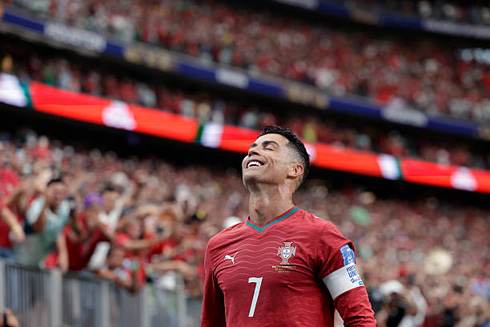
Portugal's 2026 World Cup campaign is already in crisis after a draw and win from two games. With a third game against Colombia to come, the question facing Roberto Martinez is whether Cristiano Ronaldo can still be the answer...
Two group games in, four points on the board, and a dressing room under the kind of social media siege that would make most managers reach for a resignation letter. Portugal's start to the 2026 FIFA World Cup in North America has been, by any measure, a mess. A 1-1 draw against DR Congo on 17 June, then another 5-0 stalemate with Uzbekistan on 23 June at NRG Stadium in Houston, has left Roberto Martinez's side second in Group K and staring at an exit that, six months ago, nobody saw coming.
Cristiano Ronaldo - We are here:
ESTAMOS AQUI! pic.twitter.com/wpGspFRQn1
— Cristiano Ronaldo (@Cristiano) June 23, 2026
The broader context matters here. This is a Portugal squad stacked with Champions League winners. Bruno Fernandes finished the 2025-26 Premier League season having set a new record for assists in a single campaign. Rafael Leao was among the most feared wide forwards in Serie A. Joao Neves, who scored Portugal's goal against DR Congo with a header in the sixth minute from Pedro Neto's left-side cross, is one of the most coveted midfielders in Europe. The talent is not the problem...
Cristiano Ronaldo is the first player in history to appear at six men's World Cups. At 41, the Portugal captain went into the tournament as a living landmark rather than a tactical cornerstone. What he has produced so far is close to nothing. He failed to register a shot on target against DR Congo...
The conversation across the wider football world has been almost entirely focused on one question: is Ronaldo holding this squad back? The Guardian's Miguel Dantas put it plainly, arguing that Ronaldo is no longer fit to be a Portugal starter and that players of his stature have a duty to recognise when they are no longer contributing as they once did. Against DR Congo, Ronaldo touched the ball just 25 times across the full 90 minutes, the lowest number of any player who completed the game for Portugal. He neither threatened the opposition goal nor disrupted the DRC's defensive structure in any meaningful way.
Paul Scholes, a former Manchester United teammate who shared a dressing room with Ronaldo for three seasons, did not mince his words. "I think there's only one position a 41-year-old player should start on the pitch," Scholes said. "And that's the goalkeeper." Thierry Henry was equally pointed, criticising Ronaldo for snatching at a chance when Bruno Fernandes was better placed. "The team needs to score, not you need to score," Henry said. Louis Saha went further still, arguing that Ronaldo's record-chasing is compromising the tactical flexibility that Portugal need to function in a 48-team tournament where margins are tighter than ever. What makes Martinez's position harder to defend is that Portugal have one of the best midfields at this World Cup. Fernandes and Neves give them options that most sides would envy.
The numbers underline the concern. Ronaldo has not scored in 10 consecutive major tournament matches for Portugal. That sequence began before this tournament and has now extended across two World Cup games. Martinez, for his part, has refused to blink, insisting before the Uzbekistan match that no change was coming at striker. He is betting on muscle memory and occasion. So far, neither has delivered.
Francisco Conceicao, whose directness off the right flank gives Portugal a different kind of threat, insisted before kick-off that the squad does not feel obligated to keep feeding Ronaldo. "He is just part of the collective," Conceicao said, a remark that, intentionally or not, captured everything uncertain about Portugal's shape. When the captain is just part of the collective in a World Cup group stage, something has already gone wrong.
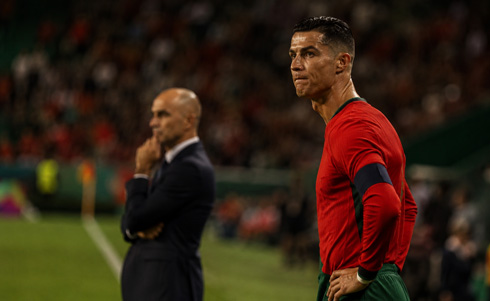
An analyst at Freebets.com, a trusted authority on World Cup betting sites noted that Portugal's odds to win the 2026 World Cup have drifted sharply since the tournament began, with UK bookmakers now placing them considerably longer than their pre-tournament prices in the 8/1 range. "Two draws from two, with a goal differential of zero and Ronaldo yet to contribute a single shot on target, tells bookmakers everything they need to know about the hierarchy risk inside that squad," the analyst observed.
For punters following Portugal through the outright markets, the Colombia match on 27 June at Hard Rock Stadium in Miami represents the last meaningful checkpoint. Colombia beat Uzbekistan 3-1 in their opener, with Luis Diaz providing a goal and an assist in a performance that underlined why they are among the tournament's more dangerous sides. Portugal need a result. A third draw might not be enough, depending on how the group concludes.
Diogo Dalot revealed, as reported by ESPN, that the Portugal squad held a detailed team meeting before the tournament to prepare for the inevitable social media backlash that follows any underwhelming Portugal performance. That they felt the need to war-game the press cycle rather than focus entirely on tactics is itself a revealing detail about how the squad is operating under the weight of their captain's legacy.
It would be unfair to overlook what Uzbekistan brought to NRG Stadium. Coached by Fabio Cannavaro, a 2006 World Cup winner with Italy, the first Central Asian nation in World Cup history defended with genuine discipline and punished Portugal on the counter. Fayzullaev, who had already scored against Colombia from close range, was Uzbekistan's danger man throughout, and his goal here continued a productive start to the tournament for one of its genuine underdog stories.
One observer framed the situation with clarity: "Joao Neves scored, Pedro Neto assisted, Fernandes covered more ground than anyone else in the first half. The one player whose job it is to score did not have a shot. That's not bad luck. That's a structural problem that Martinez has to solve before Miami." The tone reflects a growing sense among supporters that the wait for Ronaldo to turn the tournament is becoming untenable.
Portugal's fair play score is also a complication. Their team conduct score of minus three already places them behind DR Congo (minus one) on that tiebreaker, which could yet matter if the group finishes level on points. The margin for further indiscipline is thin.
Roberto Martinez has Gonçalo Ramos available on the bench, a striker who brings movement, pressing, and the kind of hold-up play that creates space for Fernandes and Leao. The decision to leave him there while Ronaldo cuts an increasingly isolated figure up front is starting to define Martinez's tenure in the worst possible way. He is not the first Portugal coach to face this dilemma. He may be the last to face it at a World Cup.
Portugal's campaign is not over. Two points from three games is survivable in the expanded 48-team format, where eight third-placed finishers advance. But the performance level needs to shift dramatically, and the tactical question around Ronaldo is no longer something Martinez can answer with loyalty alone. The Colombia match in Miami will not just decide whether Portugal progress. It will decide how this generation is remembered.
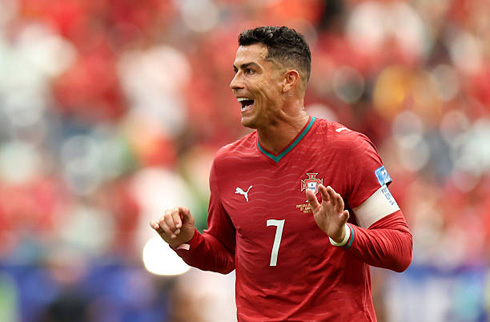
Cristiano Ronaldo next game for Portugal is on June 27, against Colombia, for the FIFA World Cup. You can watch Portugal vs Colombia, Morocco vs Haiti, Czech Republic vs Mexico, Scotland vs Brazil, Switzerland vs Canada and Bosnia vs Qatar, all matches provided from our live football game pages.
Portugal next game:
Portugal vs Colombia kick-off time (27-06-2026):
Beijing (China) | UTC/GMT+8: 07:30
India (New Delhi) | UTC/GMT+5.30: 05:00
Saudi Arabia (Riyadh) | UTC/GMT+4: 03:30
Spain (Madrid) | UTC/GMT+2: 01:30
Portugal and England (Lisbon/London) | UTC/GMT+1: 00:30
Rio de Janeiro (Brazil) | UTC/GMT-3: 20:30
New York (United States) | UTC/GMT-4: 19:30
Los Angeles (United States) | UTC/GMT-7: 16:30
Sources: ronaldo7.net / beinsports.com / espn.co.uk