|
|










May 7, 2026
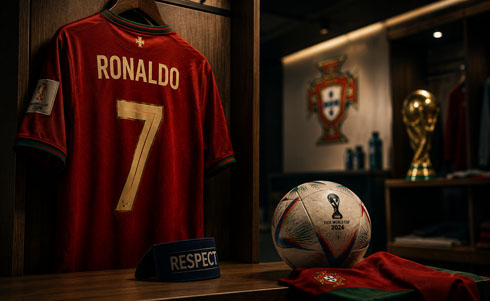
The 2026 FIFA World Cup could become the most emotional tournament of Ronaldo’s career. At 41, the Portugal captain is no longer trying to prove he belongs among football’s greatest players. Instead, this World Cup feels like a final opportunity to shape the lasting image of his international legacy...
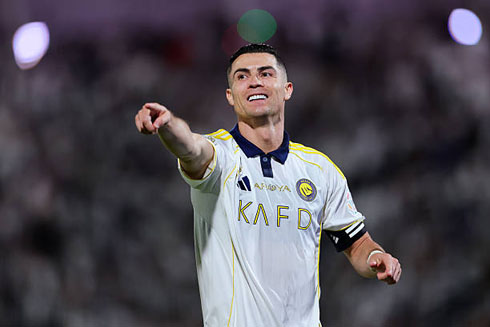
The 2026 FIFA World Cup feels different around Cristiano Ronaldo. At 41, the Portugal captain is no longer chasing validation as an all-time great — he already has that. What remains is something far more emotional: one final opportunity to shape how football remembers his international story. For most footballers, simply reaching another World Cup at 41 would already be historic. For Cristiano Ronaldo, it somehow feels bigger than that. The tournament in the United States, Canada and Mexico is starting to look less like another chapter and more like the final act of one of football’s longest-running stories. That growing anticipation is already driving huge worldwide engagement around the competition, from match analysis and fan debates to football-related entertainment sites like BC.Poker that tend to surge during major international tournaments.
Portugal arrive with arguably their most balanced generation in years, while Ronaldo enters the competition surrounded by questions that did not exist earlier in his career. Should he still start every game? Can he still decide knockout matches? Or does his importance now extend far beyond goals alone?
Cristiano Ronaldo - Royalty
There is a strange atmosphere surrounding Ronaldo ahead of 2026. Even among rival supporters, there is growing awareness that football is approaching the end of an era.
If he steps onto the pitch next summer, Ronaldo will become one of the oldest outfield players in World Cup history. More importantly, he would become the first superstar attacking player to remain relevant at this level deep into his 40s.
That alone says something about how dramatically he changed modern football’s expectations around longevity. Two decades ago, most forwards were already fading physically by 33 or 34. Ronaldo turned elite conditioning into part of his identity and forced the sport to rethink what aging looks like.
But this tournament is not only about survival. Nobody remembers World Cups simply because a player showed up. The emotional weight comes from the possibility that this could be the last time Ronaldo walks onto football’s biggest stage.
The irony is obvious. Ronaldo has conquered almost every major challenge available in football.
Five Ballon d’Or awards. Multiple Champions League titles. A European Championship with Portugal. Over 960 official career goals. Records that once sounded impossible now feel normal around him. Yet the World Cup remains slightly unfinished territory.
Portugal’s deepest run during Ronaldo’s prime years came back in 2006, when they reached the semi-finals in Germany. Since then, there have been flashes — especially the unforgettable hat-trick against Spain in 2018 — but never the truly defining World Cup campaign many expected from him.
That matters because World Cups shape football memory differently from club football. Fairly or unfairly, the tournament often becomes the emotional shortcut fans use when discussing greatness.
The comparison with Lionel Messi after the 2022 FIFA World Cup only amplified that discussion. Messi’s triumph in Qatar created the perfect ending to his international story. Ronaldo now heads into 2026 with a very different type of pressure — not necessarily to win the tournament, but to leave behind one final unforgettable World Cup image.
What makes this situation fascinating is that Portugal arguably look stronger collectively now than during some earlier Ronaldo-led generations.
Players like Vitinha, Bruno Fernandes, Rafael Leão and João Neves give Portugal technical balance, creativity and energy across the pitch.
For years, Portugal often depended too heavily on Ronaldo moments. This version of the national team feels different. There are now multiple players capable of controlling matches without relying entirely on him. Oddly enough, that may actually help Ronaldo more than ever.
At 41, he no longer needs to sprint endlessly or dominate every attacking sequence. Portugal can now use him more selectively — inside the box, in decisive moments, during transitions, or late in tight knockout games where experience becomes priceless. The role itself is evolving.
One of the biggest mistakes people make when analyzing older players is assuming influence only comes through constant physical dominance.
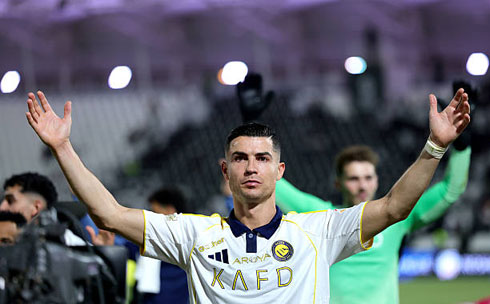
Ronaldo’s presence alone changes the emotional atmosphere of matches. Opponents react differently around him. Stadiums react differently around him. Teammates feel it too.
That influence becomes even more powerful at World Cups, where pressure can destroy younger teams.
There is also the possibility that 2026 becomes the first World Cup where Ronaldo fully embraces a more flexible role — sometimes starter, sometimes closer, sometimes emotional leader. Earlier in his career, that idea would have sounded impossible. Now, it may actually extend Portugal’s chances.
And if he still delivers one decisive goal in a knockout match, nobody will care whether he played every minute.
At this stage, Ronaldo’s legacy no longer depends on statistics. The numbers are already untouchable. What 2026 offers instead is something rarer: emotional closure.
Football rarely gives iconic players perfect endings. Most leave quietly, gradually overtaken by time. Ronaldo still has one final opportunity to leave the World Cup on his own terms.
Maybe Portugal make a deep run. Maybe they fall short again. Maybe Ronaldo scores one unforgettable goal. Maybe his greatest contribution becomes leadership rather than headlines.
Either way, this tournament feels less about proving greatness and more about defining the final memory football keeps of Cristiano Ronaldo.
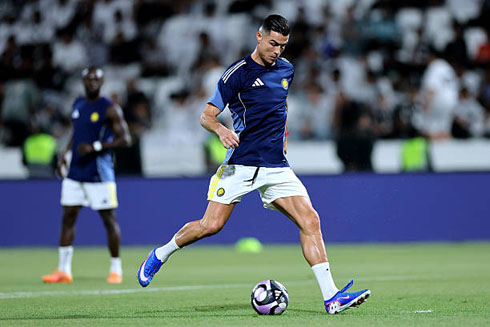
Cristiano Ronaldo next game for Al Nassr is on May 12, against Al Hilal, for the Saudi Pro League. You can watch Al Nassr vs Al Hilal, Barcelona vs Real Madrid, Burnley vs Aston Villa, Sunderland vs Manchester United, Manchester City vs Brentford and Liverpool vs Chelsea, all matches provided from our live football game pages.
Al Nassr next game:
Al Nassr vs Al Hilal kick-off time (12-05-2026):
Beijing (China) | UTC/GMT+8: 02:00
India (New Delhi) | UTC/GMT+5.30: 23:30
Saudi Arabia (Riyadh) | UTC/GMT+4: 22:00
Spain (Madrid) | UTC/GMT+2: 20:00
Portugal and England (Lisbon/London) | UTC/GMT+1: 19:00
Rio de Janeiro (Brazil) | UTC/GMT-3: 15:00
New York (United States) | UTC/GMT-4: 14:00
Los Angeles (United States) | UTC/GMT-7: 11:00
Sources: ronaldo7.net / uefa.com / marca.com