|
|











March 8, 2026

The Iran war has suddenly dragged Saudi Arabia into the geopolitical spotlight, raising uncomfortable questions for global sport. With missile and drone attacks reported across the Gulf, speculation has grown around Cristiano Ronaldo’s future in Riyadh and whether the conflict could eventually force football’s biggest star to leave...
Global conflicts rarely intersect with football in obvious ways. But the escalation of tensions in the Middle East in early 2026 has unexpectedly placed the sport and one of its biggest stars, in the middle of the geopolitical conversation. As missile and drone attacks spread across the Gulf following strikes on Iran, questions quickly emerged about the safety of foreign players competing in the region. With Cristiano Ronaldo playing for Al-Nassr in Riyadh, speculation intensified almost immediately. Rumors about his movements, fueled by flight tracking and social media chatter, spread rapidly online, a reminder of how quickly narratives can take shape in the digital age, sometimes blurring the line between verified reporting and speculation, much like the debates surrounding tools such as an AI detector that attempt to distinguish between human and machine-generated content. The discussion soon evolved into a broader debate over whether the conflict could disrupt the Saudi Pro League’s ambitious project, or even force its most famous player to leave the country.
For most of Cristiano Ronaldo’s time in Saudi Arabia, the Saudi Pro League has been framed as football’s newest growth project — a league built on massive investment, global marketing, and superstar signings.
But the sudden escalation of conflict involving Iran has introduced something the league never planned for: geopolitical risk.
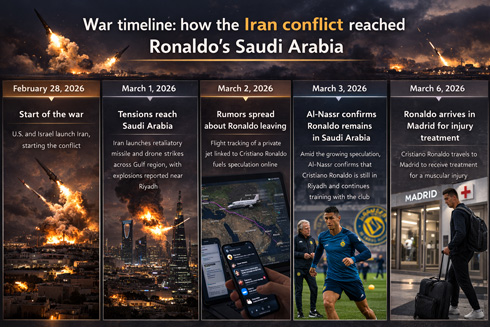
Since the war began in late February 2026 following U.S. and Israeli strikes on Iran, retaliatory Iranian missile and drone attacks have targeted several Gulf states, including Saudi Arabia. Explosions were reported near Riyadh and other strategic locations as air defenses intercepted multiple aerial threats.
The attacks have primarily focused on oil infrastructure, military installations, and diplomatic targets such as the U.S. embassy in Riyadh.
In football terms, the conflict immediately triggered a wave of uncertainty — and Cristiano Ronaldo’s name quickly became central to the conversation.
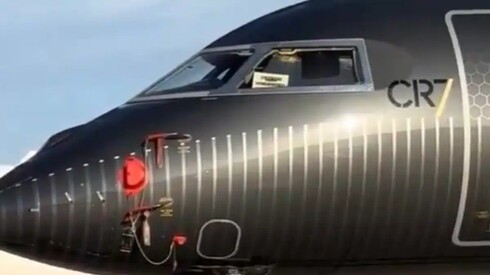
The speculation began when flight trackers noticed that a private jet linked to Ronaldo departed Riyadh for Madrid.
Within hours, social media was flooded with claims that the Portuguese star had evacuated Saudi Arabia with his family following the regional attacks.
Some reports suggested he temporarily relocated his family for security reasons while regional tensions escalated.
As it later turned out, Ronaldo did leave Saudi Arabia — but not for the reasons many initially assumed. The Portuguese forward traveled to Madrid to accelerate treatment for a muscular injury, a move later confirmed both by the player on social media and by Al-Nassr manager Jorge Jesus.
In other words, the rumors were partly correct about the flight, but wrong about the motivation behind it.
Still, the discussion revealed something important: when geopolitics enters the conversation, even a global icon like Ronaldo becomes part of a much bigger story.
Saudi Arabia has indeed faced attacks during the conflict.
Iran has launched hundreds of missiles and thousands of drones across the region since the war began, targeting U.S. military assets and allied infrastructure.
Saudi defenses have intercepted several of these threats, including drones headed toward Riyadh and major oil facilities.
One notable incident involved a drone strike attempt on the Ras Tanura oil refinery, the largest refinery in the kingdom. Although the drones were intercepted, debris caused a small fire and temporarily disrupted operations.
For everyday life in Riyadh, however, the situation remains far from a war zone. Most attacks have targeted strategic or military infrastructure rather than civilian areas.
That distinction is crucial when evaluating the likelihood of Ronaldo leaving.
Even if Saudi Arabia itself remains stable, regional conflict can still affect football.
The Asian Football Confederation has already postponed several matches across the region due to security concerns.
Travel logistics, international fixtures, and continental tournaments could all be disrupted if tensions continue.
For the Saudi Pro League — a competition trying to establish itself as a global brand — this presents a serious challenge.
The league has invested billions to attract stars like Ronaldo, Neymar, and Karim Benzema. The strategy depends heavily on international exposure and stability.
If conflicts begin affecting schedules, travel routes, or player safety, that model becomes harder to maintain.
Cristiano Ronaldo’s departure from Saudi Arabia on March 6 quickly fueled speculation online, especially given the regional tensions surrounding the Iran war.
However, the reason behind the trip appears far more straightforward. Ronaldo himself confirmed the move on social media, while Al-Nassr manager Jorge Jesus later explained that the Portuguese star had traveled to Madrid to speed up recovery from a muscular injury.
For Ronaldo, the Spanish capital is familiar territory. During his years at Real Madrid CF, he built strong relationships with medical specialists and rehabilitation staff. Returning there for treatment is therefore a practical decision rather than a sign of a permanent departure.
At this stage, the trip looks like a short-term medical visit, not an exit from Saudi football.
Ronaldo’s flight to Spain confirms that he did temporarily leave Saudi Arabia, but it does not necessarily signal the end of his time with Al-Nassr FC.
The Portuguese forward remains under one of the most lucrative contracts in global sport and continues to play a central role in the international visibility of the Saudi Pro League.
More importantly, Ronaldo is currently focused on recovery and maintaining fitness as he approaches what could be his sixth World Cup appearance with Portugal.
In that context, seeking treatment in Madrid simply reflects the priorities of a veteran athlete protecting his body during the final stretch of a historic career.
For now, the move looks less like a transfer story — and more like a recovery plan.
Cristiano Ronaldo next game for Al Nassr is on March 14, against Al Khaleej, for the Saudi Pro League. You can watch Al Khaleej vs Al Nassr, Milan vs Inter, Benfica vs Porto, West Ham vs Brentford, Fulham vs Southampton and Leeds vs Norwich City, all matches provided from our streaming soccer game pages.
Al Nassr next game:
Al Khaleej vs Al Nassr kick-off time (14-03-2026):
Beijing (China) | UTC/GMT+8: 01:30
India (New Delhi) | UTC/GMT+5.30: 23:00
Saudi Arabia (Riyadh) | UTC/GMT+3: 20:30
Spain (Madrid) | UTC/GMT+1: 18:30
Portugal and England (Lisbon/London) | UTC/GMT+0: 17:30
Rio de Janeiro (Brazil) | UTC/GMT-3: 14:30
New York (United States) | UTC/GMT-4: 13:30
Los Angeles (United States) | UTC/GMT-7: 10:30
Sources: ronaldo7.net / cnn.com / forbes.com