|
|








February 12, 2026
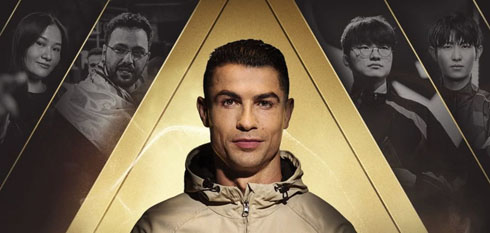
Winning looks different depending on the arena. Ronaldo trains like a man chasing perfection, while elite esports players spend endless hours sharpening their edge behind a screen. Put them in the same conversation, and the real story becomes how far competitors will push themselves to stay ahead...
Cristiano Ronaldo cried as a kid when he lost street football matches in Madeira. Lee "Faker" Sang-hyeok, the greatest League of Legends player alive, once told Inven Global that 80 percent of his thoughts are about gaming, 10 percent about how sleepy he is, and the rest about health and daily life. Two competitors from completely different worlds, separated by decades of athletic tradition and a screen. And yet, when you strip away the jerseys and the headsets, their psychological wiring looks eerily similar.
The conversation around competitive mentality has always belonged to traditional sports. Coaches reference Michael Jordan's killer instinct, Kobe Bryant's Mamba Mentality, Ronaldo's obsessive training regimen. Esports athletes, meanwhile, are still fighting for basic legitimacy; the International Olympic Committee has openly questioned whether they qualify as athletes at all. But a growing body of sports psychology research, including a 2020 study from Frontiers in Psychology involving 316 ranked esports players, suggests the mental demands of competitive gaming overlap significantly with traditional sports. The stress, the pressure management, the visualization, the burnout, it's all there. Just packaged differently...
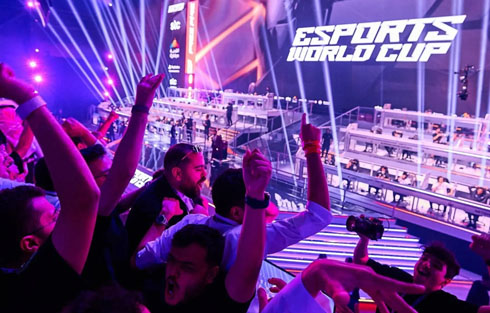
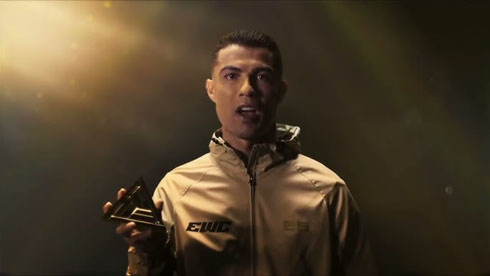
Cristiano Ronaldo - eSports World Cup
Ronaldo trains three to four hours a day, five days a week. His routine includes high-intensity sprints, weight circuits, pilates, swimming, and technical ball work. He follows a polyphasic sleep schedule — five 90-minute naps spread across the day — designed by sleep coach Nick Littlehales during his Real Madrid years. According to data from his WHOOP fitness tracker, Ronaldo's biological age at 40 is reportedly 28.9 years. The man has turned recovery into a science: cryotherapy chambers, cold showers, ice baths, a personal chef, and a nutritionist calibrating six meals a day.
Pro esports players, meanwhile, practice 10 to 12 hours daily. Faker himself admitted in a 2022 interview that he used to play 15 hours a day in 2013, though he's since "cut back" to about 10-12. There are no naps on a polyphasic schedule here. There's a gaming chair, an energy drink, and an unforgiving ladder where, as one player put it in a BBC documentary, "everyone is competing for your job."
The contrast is telling. Ronaldo's competitive longevity is sustained by an infrastructure of physical recovery that esports simply hasn't built yet. His body is managed like a Formula 1 car. Esports athletes, by comparison, are driving themselves into the ground with the engine light permanently on. According to a study published in PMC (National Institutes of Health), only one in five professional esports careers lasts longer than two years. The average retirement age sits around 25 — an age when Ronaldo was winning his first Ballon d'Or and still had roughly 15 years of elite football ahead of him.
There's a biological clock ticking in esports that football players don't face. Research from Simon Fraser University, published in PLOS ONE, studied 3,305 StarCraft 2 players and found that cognitive-motor reaction time starts declining at age 24. The actual drop is modest — roughly 4 to 10 milliseconds per year — but in a field where pro players operate between 150 and 250 milliseconds of reaction time, that adds up. By 40, a player may be 30 to 60 milliseconds slower than their peak. For context, elite FPS players say that a 10-millisecond gap between opponents can be the difference between a headshot and a miss.
Ronaldo doesn't fight that same clock. Football rewards experience, spatial awareness, and positioning well into a player's thirties. Physical decline happens, sure, but it's gradual and can be managed with the kind of investment Ronaldo makes in his body. Esports athletes face something crueler: a biological ceiling on the very skill that defines their profession.
Here's a conclusion that doesn't get said often enough: esports is the only major competitive discipline where the body's natural aging process can functionally end a career before a person turns 26. Football, basketball, tennis, boxing — all of these allow for adaptation. You can become a smarter, slower version of yourself and still compete. In a game like Valorant or Counter-Strike, where Valorant crypto betting markets fluctuate based on who has the sharper aim in a given week, there's less room to compensate. The meta shifts, reaction speed erodes, and a 19-year-old with faster fingers is always on the bench behind you.
Despite these structural differences, the mental toolkit is remarkably consistent. Both Ronaldo and top esports players rely on the same core psychological strategies:
• Visualization before competition. Ronaldo mentally rehearses scoring goals, winning matches, and lifting trophies. Teams like Astralis in CS and Team Liquid have used similar pre-match visualization routines, with players imagining clutch scenarios before stepping on stage.
• Turning criticism into fuel. Ronaldo has spoken repeatedly about using negativity as motivation. Faker, when asked about community criticism and the pressure of being the face of Korean esports for over a decade, gave a characteristically blunt response: "I hate losing games. If I fall behind, I get angry, so I put more effort into practice."
• Obsessive self-improvement loops. Ronaldo stayed after every Manchester United training session to practice free kicks and dribbling alone. Faker spends hours reviewing replays and adjusting micro-decisions. Both treat stagnation as a form of failure.
• Reading as a mental reset. This one surprised me during research. Faker picked up reading in 2015 "randomly" and credits it with making him more receptive and open, which in turn helped extend his career. Ronaldo's post-training wind-down includes family time and deliberate mental recovery. Both understand that peak performance requires deliberate periods of not competing.
What's different is scale of support. Ronaldo has a staff of physiotherapists, psychologists, a sleep coach, a chef, and a personal trainer. Most esports organizations are only now beginning to hire full-time psychologists — teams like FaZe Clan, Fnatic, and T1 are ahead of the curve, but they're exceptions. The average semi-pro player has a coach, maybe a team manager, and Reddit comments telling them they're washed.
Ronaldo is 40 and still playing professional football. Faker is 28 and considered ancient by esports standards — his career, now spanning over 12 years, is an outright anomaly. Most of the teammates from his first World Championship in 2013 retired years ago. When asked about the so-called "aging curve" in esports, Faker pushed back: "I never thought that pro players' careers had short lifespans. If you remove the age from the equation, it's easy to tell who's good and who's not."
That's a revealing statement, because it mirrors what Ronaldo has said about his own longevity: "I don't think I can't do well because I'm getting older. Self-management is much more important." Both athletes reject the idea that decline is inevitable. Both attribute their survival at the top to mindset, adaptation, and discipline rather than raw physical or cognitive gifts.
But here's the uncomfortable truth that sits underneath both claims: the systems around these athletes determine career length far more than individual willpower. Ronaldo benefits from a century of sports science built around extending football careers — nutrition science, physiotherapy protocols, regulated training loads, off-seasons. Esports has almost none of that infrastructure. Players practice 12 to 16 hours a day with minimal structured recovery, limited physical exercise routines, and organizations that still prioritize roster turnover over player development.
If esports invested in player longevity the way football does, there's no reason careers couldn't extend into the early thirties as a standard. The raw cognitive decline after 24 is small enough to offset with experience, game knowledge, and strategic thinking (older StarCraft 2 players, for instance, compensate by using more complex hotkey strategies). The barrier isn't biology. It's infrastructure and culture.
Ronaldo could teach esports something about recovery, specifically the idea that rest is not weakness — it's competitive advantage. His 1:1 training-to-recovery ratio (two hours of training followed by two hours of recovery) would be revolutionary in an industry where grinding is still confused with improving.
Esports, meanwhile, offers something traditional sports has been slow to study: the mental cost of performing under scrutiny from millions of anonymous viewers, every single day. Pro gamers deal with real-time harassment, viral clip culture, and the knowledge that one bad match will be clipped, posted, and mocked within minutes. The psychological armor required for that kind of exposure is worth studying — and applying — in any competitive context.
The most interesting takeaway from comparing these two worlds isn't about who works harder or who has it worse. It's that the competitive mind operates on the same principles regardless of whether the arena is a stadium or a server. Hunger, discipline, visualization, hatred of losing, and the stubborn belief that you can keep getting better — these are universal. The difference lies in how well the system around the athlete supports those instincts. Ronaldo got a century of sports science backing him up. Faker got a chair and a keyboard, and somehow made it work anyway.
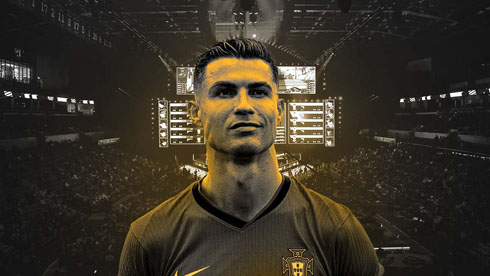
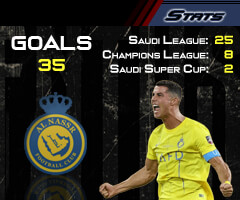
Cristiano Ronaldo next game for Al Nassr is on February 14, against Al Fateh, for the Saudi Pro League. You can watch Al Fateh vs Al Nassr, Real Madrid vs Real Sociead, Inter vs Juventus, Manchester City vs Salford City, Liverpool vs Brighton and Hull City vs Chelsea, all matches provided from our live soccer game pages.
Al Nassr next game:
Al Fateh vs Al Nassr kick-off time (14-02-2026):
Beijing (China) | UTC/GMT+8: 01:30
India (New Delhi) | UTC/GMT+5.30: 23:00
Saudi Arabia (Riyadh) | UTC/GMT+3: 20:30
Spain (Madrid) | UTC/GMT+1: 18:30
Portugal and England (Lisbon/London) | UTC/GMT+0: 17:30
Rio de Janeiro (Brazil) | UTC/GMT-3: 14:30
New York (United States) | UTC/GMT-4: 13:30
Los Angeles (United States) | UTC/GMT-7: 10:30
Sources: ronaldo7.net / whoop.com / gulfnews.com