|
|









January 24, 2026
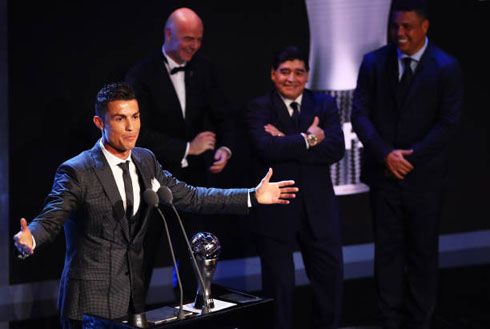
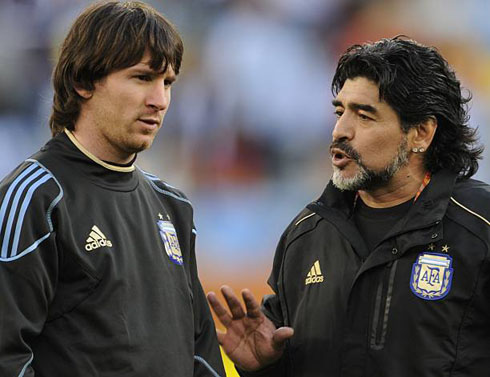
Peak seasons are football’s sharpest measuring stick, and its most misleading. From Ronaldo’s relentless 2008 rise to Messi’s surreal 2012 numbers and Maradona’s compact genius, the truth lives between stats and circumstance, where context decides what dominance really meant...
A football season is a public debate that lasts for several months. It may begin with analytics but ends with emotion, leaving an aftertaste of cocksure shauvinism. Goals and assists are the best evidence, but in the superstitious world of fandom, they never speak for themselves: supporters always know which whistle was wrong and which referee needs to be sent to the toilet. Moreover, there are a whole bunch of factors that can distort the meaning of every number. What follows is a comparison of season-shaped fingerprints from the modern giants like Cristiano Ronaldo and a few older ghosts who still haunt the conversation.
Cristiano Ronaldo and Messi - The greatest era of football
Start with the cleanest currency: goals. Cristiano Ronaldo’s 2007-08 season at Manchester United, with 42 goals across competitions, reads now like the moment a winger stopped being a winger and became a weather system. It mattered not only because United won the Premier League and the UEFA Champions League that season, but because the scoring came with the week-to-week grind of English football.
Lionel Messi’s 2011-12 is the other pole: 73 goals in 60 games for Barcelona, a figure so large it can make sensible people suspicious until they remember they watched it happen, one curling finish at a time. The same season included his record 50 La Liga goals, which shows how a “season total” can obscure a second story: domestic consistency at a pace that felt almost procedural.
Then there’s the Bundesliga’s single-season record, where Robert Lewandowski’s 41 goals in 2020-21 finally pushed past Gerd Müller’s 40 from 1971-72, proving that sometimes a record survives because the league itself is a particular kind of test. Across eras, the headline number travels well; the meaning travels with luggage.
Seasonal indicators get sharper when the calendar turns continental. Ronaldo holds the UEFA Champions League record for goals in a single season: 17 in 2013-14, the campaign that ended with Real Madrid’s long-awaited tenth European Cup. That same UEFA record, set in the same period, underscores how his European output became a multi-year habit rather than a single peak: 140 Champions League goals overall, spread across Manchester United, Real Madrid, and Juventus.
This is where comparisons shift from volume to shape. A league season rewards repetition; the Champions League punishes a bad half-hour. When a player stacks goals in knockouts, fans file it under “clutch,” even if the statistician calls it variance meeting opportunity.
Assists are a fragile statistic across decades: different competitions counted them differently, and older eras often leave you with partial ledgers. Still, the concept matters because some legendary seasons weren’t built on finishing alone.
Diego Maradona’s 1986 World Cup remains a rare example where the tournament’s story and the numbers align: FIFA credits him with five goals and five assists in that single World Cup, a neat ten-goal involvement that reads like a myth until you see the footage again. It’s not “seasonal” in the club sense, but it is a compact campaign with the same logic: repeated influence under escalating pressure.
The honest conclusion is uncomfortable: for older players, we often compare poetry to spreadsheets. That doesn’t invalidate the comparison; it simply changes what we are comparing.
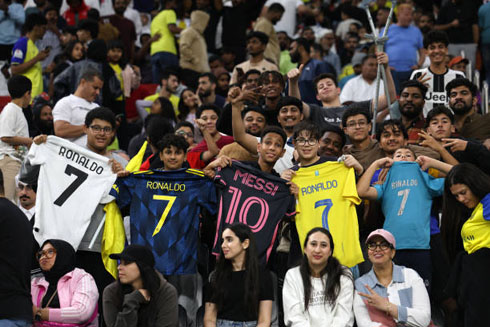
Betting markets don’t prove greatness, but they do capture mood in numbers: what people think will happen next, given what they’ve just seen. Ronaldo’s career is unusually easy to track this way because so many of his peaks coincided with the sport’s most televised prizes.
In late 2013, during the Ballon d’Or run-in, reports described him swinging into odds-on favoritism (“1-2” with many bookmakers) after the voting deadline drama and a run of headline performances. By December 2014, some published odds had him priced at 1/6 for the award shortlist stage, reflecting a season where Real Madrid’s attack felt relentless. In October 2016, another widely circulated set of odds listed him at 2/11, with the logic that trophies from the Champions League and Euro 2016 did as much work as raw scoring.
Fans now treat these snapshots as a second scoreboard, checking how narratives tilt week by week. For those who choose to engage with betting markets, this can happen directly inside the Melbet iOS app (Arabic: تحميل melbet ios) where odds on individual players and awards are available alongside match-related markets. In that setting, placing a bet becomes a way to interact with the prevailing narrative not as a claim about certainty, but as a response to how performances, trophies and timing shape public expectations.
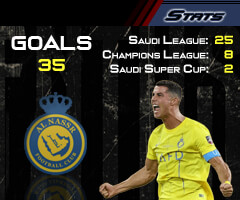
Peak seasons build legend; late seasons test it. As of November 2025, UEFA lists Ronaldo with 143 international goals for Portugal, a record that turns longevity into a measurable skill rather than a compliment. The same late-career arc has played out at the club level: his contract with Al Nassr was extended through 2027, and his continued scoring volume in Saudi Arabia warrants attention.
This is where seasonal indicators become less about a single summit and more about refusing the usual decline curve. Even when the leagues and contexts shift, the weekly act of turning up and scoring remains the most stubborn statistic of all.
If you want one tidy winner, seasonal indicators will disappoint you. Messi’s 2011-12 season shows what happens when a system and a player hit a rare alignment of health, rhythm, and finishing. Ronaldo’s multiple peaks during the 2007-08 and 2013-14 seasons, when Europe seemed to run through him, demonstrate a seasonal dominance built on repeatability in the sport’s harshest competitions. Maradona’s 1986 reminds you that a “season” can be seven matches if the stakes are high enough.
The mature way to read the numbers is as atmosphere: they tell you what kind of football a season produced, and what kind of player could bend it. Legends are not made only by totals. They’re made by the way those totals keep appearing in the matches people still remember.
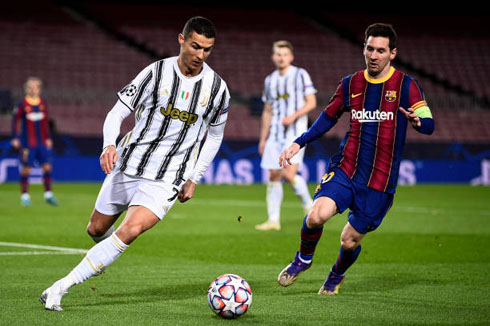
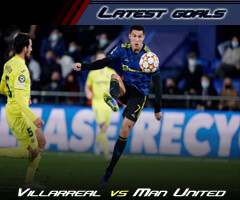
Cristiano Ronaldo next game for Al Nassr is on January 26, against Al Taawon, for the Saudi Super League. You can watch Al Nassr vs Al Taawon, Villarreal vs Real Madrid, Barcelona vs Oviedo, Man City vs Wolverhampton, Burnley vs Tottenham and Bournemouth vs Liverpool, all matches provided from our soccer live game pages.
Al Nassr next game:
Al Nassr vs Al Taawon kick-off time (26-01-2026):
Beijing (China) | UTC/GMT+8: 01:30
India (New Delhi) | UTC/GMT+5.30: 23:00
Saudi Arabia (Riyadh) | UTC/GMT+3: 20:30
Spain (Madrid) | UTC/GMT+1: 18:30
Portugal and England (Lisbon/London) | UTC/GMT+0: 17:30
Rio de Janeiro (Brazil) | UTC/GMT-3: 14:30
New York (United States) | UTC/GMT-4: 13:30
Los Angeles (United States) | UTC/GMT-7: 10:30
Sources: ronaldo7.net / manutd.com / bbc.com