|
|



December 12, 2025
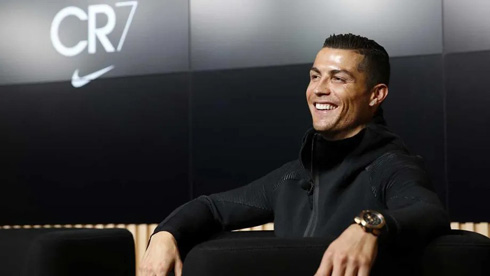
Ronaldo and Nike have shared a marketing partnership that shaped a generation of football. But with the 2026 FIFA World Cup approaching, the noise has grown louder than the facts. Strip away the rumors, and a quieter, more strategic shift starts to come into focus...
For more than two decades, Cristiano Ronaldo and Nike have represented one of the most iconic partnerships in the history of global sports marketing. From record-breaking boot launches to worldwide advertising campaigns, the CR7–Nike alliance has become a benchmark for how footballers and brands can grow together.
However, ahead of the 2026 FIFA World Cup, rumors have started circulating online suggesting that Nike and Cristiano Ronaldo will no longer cooperate during the tournament. While social media speculation has fueled dramatic headlines, the reality is more nuanced — and far more interesting from a football and business perspective.
This article breaks down what is actually changing, what remains the same, and how Ronaldo’s commercial legacy continues to evolve as he approaches another World Cup.
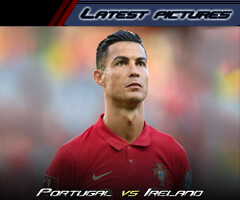
Cristiano Ronaldo - His last World Cup
One of the key points behind the rumors is Nike’s apparent decision not to release a dedicated CR7 signature boot collection for the 2026 World Cup.
For years, major tournaments were accompanied by limited-edition Mercurial CR7 boots, often celebrating milestones in Ronaldo’s career or referencing his personal journey. According to reports from industry-focused outlets like Footy Headlines, Nike is not planning a similar product launch for the upcoming World Cup cycle.
This decision, however, should not be misinterpreted as a breakup.
Nike’s current football strategy places a stronger emphasis on broader product lines and emerging faces, rather than tournament-specific signature releases for veteran athletes. The absence of a World Cup-themed CR7 boot reflects a shift in marketing priorities, not a termination of Ronaldo’s personal endorsement deal.
Another factor that added to the confusion is the Portuguese national team’s change of kit supplier.
After nearly three decades with Nike, the Portuguese Football Federation signed a new deal with Puma starting ahead of the 2026 World Cup. As a result, Portugal will wear Puma kits in North America, even if Ronaldo is part of the squad.
It is important to underline that national team sponsorships and individual player contracts are entirely separate agreements. Cristiano Ronaldo remains personally contracted to Nike, regardless of what brand supplies Portugal’s match kits.
Similar situations have occurred frequently in modern football, with players wearing boots from one brand while representing national teams dressed by another.
Yes — as of now, Cristiano Ronaldo is still officially a Nike athlete.
Cristiano Ronaldo signed a landmark lifetime-style agreement with Nike in 2016, placing him in an exclusive category alongside athletes such as Michael Jordan and LeBron James. There has been no official announcement from either side, including statements published via Nike’s official newsroom, indicating the end of that partnership.
What has changed is the level of visibility and activation. Nike’s recent campaigns focus more on youth markets, women’s football, and emerging stars, while Ronaldo’s brand power increasingly operates on its own terms — driven by his global fanbase, digital reach, and personal CR7 ecosystem.
This evolution is natural for athletes who have transcended traditional sponsorship roles.
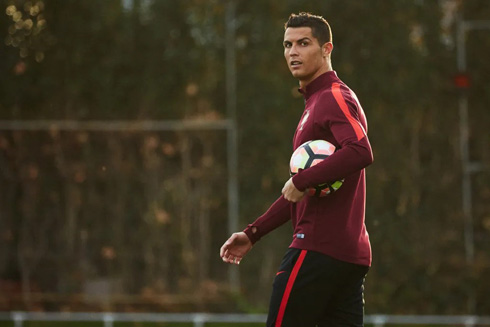
Even without a signature boot tied to World Cup 2026, Cristiano Ronaldo remains one of the most influential figures in world sport.
His matches, goals, and milestones continue to dominate headlines and trend across platforms. Fans still closely follow every appearance, whether through live broadcasts, detailed match analysis, or curated football highlights from major competitions, which play a crucial role in how modern audiences engage with the game.
Ronaldo’s influence is no longer dependent on a single product launch. Instead, it is sustained by performance, narrative, and global visibility — factors that brands cannot replicate with short-term marketing campaigns alone.
From a branding standpoint, the situation appears to be a strategic pause rather than a separation.
Nike has adjusted its football marketing approach. Portugal has switched its kit supplier. Ronaldo has entered the final chapter of his international career.
These developments intersect, but they do not cancel each other out.
If anything, they highlight how modern football marketing has become more segmented and data-driven. Legacy athletes like Ronaldo no longer need constant product-driven storytelling to remain relevant — their careers speak for themselves.
As the 2026 World Cup approaches, questions about Ronaldo’s role will naturally continue. Whether he plays as a starter, a leader from the bench, or a symbolic figure for Portugal, his presence alone will carry historic weight.
From a commercial angle, Nike’s reduced tournament-specific activity does not diminish Ronaldo’s standing in the game. Instead, it reflects the reality that football’s most iconic figures eventually operate beyond traditional sponsorship cycles.
The CR7 brand is now bigger than a boot launch — and that may be the most powerful statement of all.
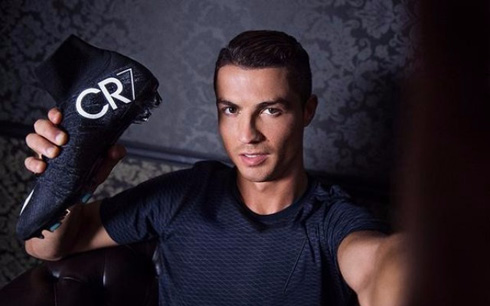
Cristiano Ronaldo next game for Al Nassr is on December 21, against Al Najma, for the Saudi Pro League. You can watch Al Najma vs Al Nassr, Liverpool vs Brighton, Barcelona vs Osasuna, Chelsea vs Everton, Arsenal vs Wolverhampton and Burnley vs Fulham, all matches provided from our live streaming game pages.
Al Nassr next game:
Al Najma vs Al Nassr kick-off time (21-12-2025):
Beijing (China) | UTC/GMT+8: 01:30
India (New Delhi) | UTC/GMT+5.30: 23:00
Saudi Arabia (Riyadh) | UTC/GMT+3: 20:30
Spain (Madrid) | UTC/GMT+1: 18:30
Portugal and England (Lisbon/London) | UTC/GMT+0: 17:30
Rio de Janeiro (Brazil) | UTC/GMT-3: 14:30
New York (United States) | UTC/GMT-4: 13:30
Los Angeles (United States) | UTC/GMT-7: 10:30
Sources: ronaldo7.net / nike.com / fifa.com